
Posted At: Apr 06, 2026 - 1,111 Views
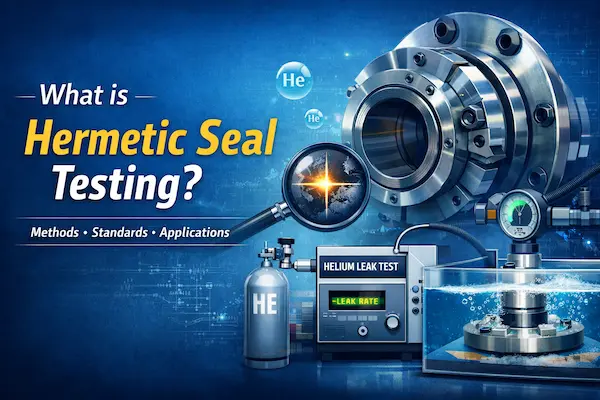
What Is Hermetic Seal Testing? Methods, Standards & Applications
Introduction
In industries where leakage is not just a problem but a critical failure, ensuring airtight sealing becomes essential. This is where hermetic seal testing plays a vital role. From aerospace components to industrial pumps and mechanical seals, hermetic sealing ensures that systems remain completely leak-proof under demanding conditions.
If you’re dealing with high-pressure pumps, hazardous fluids, or precision equipment, understanding hermetic seal testing can help you improve performance, safety, and reliability.
In this blog, we’ll break down everything you need to know about hermetic seal testing, including its methods, standards, and real-world applications.
What Is Hermetic Seal Testing?
Hermetic seal testing is a process used to verify whether a component or system is completely airtight or leak-proof. A hermetically sealed system prevents the entry or escape of gases, liquids, or contaminants.
Unlike standard sealing, hermetic sealing ensures zero leakage (or leakage within extremely tight limits), which is critical for:
- High-pressure systems
- Vacuum environments
- Hazardous chemical handling
- Sensitive electronic components
In simple terms, hermetic seal testing ensures that your sealing system performs perfectly under real-world conditions.
Why Is Hermetic Seal Testing Important?
Hermetic seal testing is not just about quality control—it’s about preventing failure, protecting equipment, and ensuring safety.
Key Benefits:
- ✅ Prevents leakage of hazardous fluids or gases
- ✅ Enhances equipment lifespan
- ✅ Improves operational efficiency
- ✅ Reduces maintenance and downtime
- ✅ Ensures compliance with industry standards
For industries using mechanical seals, improper sealing can lead to costly downtime and safety hazards. That’s why testing is non-negotiable.
Types of Hermetic Seal Testing Methods
There are several methods used in hermetic seal testing, each designed for different applications and sensitivity levels.
1. Helium Leak Testing
This is one of the most accurate and widely used methods.
How it works:
- Helium gas is introduced into the system
- A mass spectrometer detects any escaping helium
Why helium?
- It is inert, non-toxic, and has very small molecules
- Can detect extremely tiny leaks
Best for:
- Aerospace
- Semiconductor industries
- High-precision mechanical seals
2. Bubble Emission Testing (Water Submersion Test)
A simple yet effective method.
How it works:
- The component is submerged in water
- Air pressure is applied
- Bubbles indicate leakage
Advantages:
- Cost-effective
- Easy to perform
Limitations:
- Not suitable for detecting micro-leaks
3. Pressure Decay Testing
Used widely in industrial applications.
How it works:
- The system is pressurized
- Pressure drop over time is measured
Key benefit:
- Non-destructive and automated
Used in:
- Pumps
- Valves
- Mechanical seal assemblies
4. Vacuum Decay Testing
Ideal for detecting leaks in sealed systems.
How it works:
- A vacuum is created inside the test chamber
- Any pressure increase indicates leakage
Best for:
- Packaging industry
- Sensitive sealed components
5. Dye Penetration Testing
A visual method used for surface-level leaks.
How it works:
- Dye is applied to the surface
- Any cracks or leaks become visible
Limitations:
- Only detects surface defects
Hermetic Seal Testing Standards
To ensure consistency and reliability, hermetic seal testing must follow international standards.
Common Standards:
- MIL-STD-883 – Used for microelectronic devices
- ASTM E493 – Standard guide for leak testing
- ISO 20485 – Focuses on non-destructive testing methods
- IPC-TM-650 – Used in electronics testing
Following these standards ensures:
- Accurate testing results
- Global compliance
- Better product acceptance
Applications of Hermetic Seal Testing
Hermetic seal testing is widely used across industries where leak prevention is critical.
1. Mechanical Seals & Pumps
In industries like oil & gas, chemical processing, and water treatment:
- Prevents fluid leakage
- Ensures pump efficiency
- Reduces seal failure
👉 If you’re working with industrial pumps, proper testing helps avoid issues like leakage and performance drop.
2. Aerospace Industry
Used in:
- Fuel systems
- Hydraulic systems
- Electronic enclosures
Even a minor leak can lead to catastrophic failure, making hermetic testing essential.
3. Electronics & Semiconductor Industry
Hermetic sealing protects sensitive components from:
- Moisture
- Dust
- Corrosion
Used in:
- Microchips
- Sensors
- Circuit boards
4. Medical Devices
In medical equipment:
- Ensures sterility
- Prevents contamination
Used in:
- Implants
- Diagnostic devices
5. Automotive Industry
Applied in:
- Fuel systems
- EV battery packs
- Sensors
Ensures durability and safety in extreme conditions.
Challenges in Hermetic Seal Testing
While hermetic seal testing is highly effective, it comes with certain challenges:
- Detecting extremely small leaks
- High cost of advanced testing equipment
- Complexity in testing large systems
- Requirement of skilled technicians
However, the benefits far outweigh these challenges, especially in critical industries.
Best Practices for Effective Hermetic Seal Testing
To get accurate results, follow these best practices:
- ✔ Choose the right testing method based on application
- ✔ Ensure proper calibration of testing equipment
- ✔ Conduct testing under real operating conditions
- ✔ Follow international standards
- ✔ Maintain proper documentation
How Hermetic Seal Testing Improves Mechanical Seal Performance
For companies like QMSeals, hermetic seal testing directly impacts product quality.
It helps in:
- Identifying early-stage seal failures
- Improving seal design
- Enhancing durability
- Ensuring leak-proof performance
This is especially important in high-pressure and chemical pump applications, where even a minor leak can cause major issues.
Conclusion
Hermetic seal testing is a critical process that ensures complete leak-proof performance in high-demand applications. Whether you’re working with pumps, mechanical seals, or precision equipment, proper testing helps improve safety, reliability, and efficiency.
By using the right methods and following global standards, industries can significantly reduce failures and enhance system performance.
If your goal is zero leakage and maximum reliability, investing in proper hermetic seal testing is the smartest move.
Frequently Asked Questions:
1. What is hermetic seal testing used for?
Hermetic seal testing is used to detect leaks in sealed systems to ensure they are completely airtight and safe for operation.
2. Which is the most accurate hermetic leak testing method?
Helium leak testing is considered the most accurate method for detecting very small leaks.
3. Is hermetic seal testing necessary for mechanical seals?
Yes, it helps ensure leak-proof performance and prevents costly failures in industrial applications.
4. What industries use hermetic seal testing?
Industries like aerospace, electronics, medical devices, automotive, and pump manufacturing widely use hermetic seal testing.
5. Can hermetic seal testing detect micro leaks?
Yes, advanced methods like helium leak testing can detect extremely small leaks.

