
Posted At: Jul 28, 2026 - 730 Views
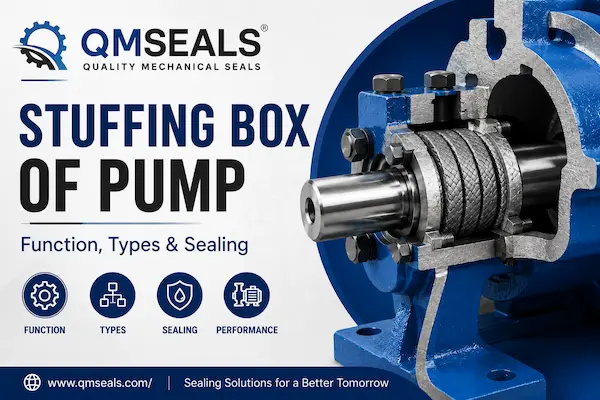
Stuffing Box of Pump – Function, Types & Sealing Solutions
The stuffing box of a pump is a hollow sealing chamber around the rotating shaft. It stops process fluid from escaping where the shaft exits the pump casing - using either gland packing or a mechanical seal. If yours is leaking, overheating, or wearing the shaft, a mechanical seal upgrade is almost always the right call.
What Is a Stuffing Box in a Pump?
A stuffing box is a cylindrical cavity built into the pump casing, positioned where the rotating shaft passes through to the outside. Its sole job: prevent process fluid from leaking out along the shaft while still letting the shaft spin freely. Looking for a sealing solution for your stuffing box? Explore our stuffing box sealing solutions.
The chamber is packed with a sealing element - traditionally braided gland packing, and increasingly a precision mechanical seal. Without it, even a modest 50 psi centrifugal pump would spray fluid continuously at the shaft exit.
How Does a Pump Stuffing Box Work?
When the pump runs, the shaft rotates inside the stuffing box housing. The packing rings (or seal faces) press against the shaft sleeve, creating a controlled barrier between the high-pressure pump interior and the atmosphere.
In a packed stuffing box, a small, deliberate drip of fluid (typically 40–60 drops per minute) is allowed through. This leakage lubricates and cools the packing - without it, the packing overheats and fails fast. A mechanical seal stuffing box eliminates that visible drip entirely, relying on precision-lapped seal faces instead.
The gland follower is tightened periodically to maintain compression as the packing wears. Get it wrong - too loose and you get flooding; too tight and you get heat, shaft damage, and premature failure.
Main Components of a Stuffing Box
Every pump stuffing box assembly includes these core parts:
Stuffing box housing - the machined cavity in the pump casing that contains all other components
Gland follower (packing gland) - the adjustable plate that compresses the packing rings against the shaft
Packing rings (gland packing) - braided rings of PTFE, graphite, or aramid fibre that form the primary seal
Lantern ring - a spacer ring that allows flush or cooling liquid to be injected mid-packing, preventing heat build-up
Shaft sleeve - a replaceable hardened sleeve over the shaft that takes the wear, protecting the shaft itself
Each component is a wear item. Ignore one, and the others fail faster.
Types of Stuffing Box in Pumps
Packed Stuffing Box (Gland Packing)
The traditional design. Packing rings are compressed around the shaft sleeve by tightening the gland follower. Simple, low-cost, and field-adjustable - but it requires regular re-tightening, produces continuous leakage, and wears the shaft sleeve over time.
Best suited for: low-pressure water pumps, slurry applications, and situations where some leakage is tolerable.
Mechanical Seal Stuffing Box
Here the packing is replaced by a mechanical seal - two precision-lapped faces (one rotating, one stationary) that create a near-zero-leakage barrier. The stuffing box housing acts as the seal chamber.
Best suited for: chemical dosing pumps, hot-oil systems, hazardous fluids, and any application where leakage is unacceptable.
| Feature | Gland Packing | Mechanical Seal |
|---|---|---|
| Leakage | Controlled drip | Near-zero |
| Maintenance | Frequent adjustment | Minimal |
| Shaft wear | High | Low |
| Initial cost | Low | Higher |
| Lifespan | Months | 2–5 years+ |
Common Problems with Stuffing Boxes
Even well-maintained stuffing boxes fail. Here are the most common issues:
Excessive leakage - Worn or incorrectly installed packing; gland follower not tightened; scored shaft sleeve
Overheating - Gland over-tightened, blocking the lubrication drip; lantern ring blocked; insufficient flush flow
Shaft sleeve wear - Abrasive media cutting into the sleeve; misalignment causing eccentric shaft movement
Packing blow-out - Sudden pressure surge forcing packing out of the housing
Vibration and noise - Shaft misalignment or bearing failure transmitting load into the stuffing box
Catching these early saves the shaft, the sleeve, and the pump casing.
When to Replace a Stuffing Box with a Mechanical Seal
If you're adjusting the gland every week, the answer is: now.
Upgrading from gland packing to a mechanical seal delivers:
Near-zero leakage - no more drip trays, no product loss, no slip hazard on the floor
Less maintenance - mechanical seals typically run 2–5 years without intervention vs. monthly packing adjustments
Reduced shaft sleeve wear - seal faces don't grind against the sleeve the way packing does
Lower energy consumption - less friction means less power draw, measurable on high-duty-cycle pumps
Regulatory compliance - essential for hazardous, toxic, or environmentally sensitive fluids
The one caveat: the stuffing box bore dimensions must suit the mechanical seal. A proper engineered retrofit - not a rough drop-in - is what delivers the full benefit. That's exactly what QMSEALS designs.
QMSEALS Stuffing Box Sealing Solutions
QMSEALS is a mechanical seal manufacturer based in India, supplying custom sealing solutions to customers across Dubai, Vietnam, Africa, and global industrial markets.
We design and supply mechanical seals that directly replace or upgrade stuffing box packing - engineered to your pump's exact bore, shaft diameter, and operating conditions.
Why QMSEALS:
15+ years of manufacturing experience in mechanical seals for centrifugal, chemical, and process pumps
Custom seal designs matched to your stuffing box dimensions - no guesswork, no ill-fitting drop-ins
Global supply with fast dispatch to the Middle East, Southeast Asia, and Africa
Free installation support - our engineers guide your team through the retrofit process
Full material range - carbon, silicon carbide, tungsten carbide, PTFE, Viton, EPDM, and more
Whether you're upgrading a single pump or standardising seals across a plant, we'll quote fast and supply faster.
Frequently Asked Questions
What Is the Purpose of a Stuffing Box in a Pump?
The stuffing box controls fluid leakage where the rotating shaft exits the pump casing. It houses the sealing element - either gland packing or a mechanical seal - that prevents process fluid from escaping into the environment while allowing the shaft to rotate freely.
What Is the Difference Between a Stuffing Box and a Mechanical Seal?
A stuffing box is the housing or chamber; a mechanical seal is one type of sealing element that fits inside it. The other option is gland packing. Mechanical seals offer near-zero leakage and longer service life. Gland packing is cheaper upfront but requires frequent adjustment and produces a constant controlled drip.
How Do I Know If My Stuffing Box Needs Replacement?
Key warning signs: leakage that can't be controlled by tightening the gland, visible scoring or grooves on the shaft sleeve, overheating at the seal area, or packing that needs replacing every few weeks. Any of these points to a worn assembly - and usually signals it's time to upgrade to a mechanical seal.
Can QMSEALS Supply Mechanical Seals to Replace Stuffing Box Packing?
Yes. QMSEALS specialises in exactly this. We engineer mechanical seals to fit your existing stuffing box housing dimensions, so the retrofit is clean and reliable. Send us your pump model, shaft diameter, and stuffing box bore - we'll handle the rest.

