
How to Select Mechanical Seal Material for Different Chemicals
Mechanical Seals- Home
- Mechanical Seals
- How to Select Mechanical Seal Material for Different Chemicals
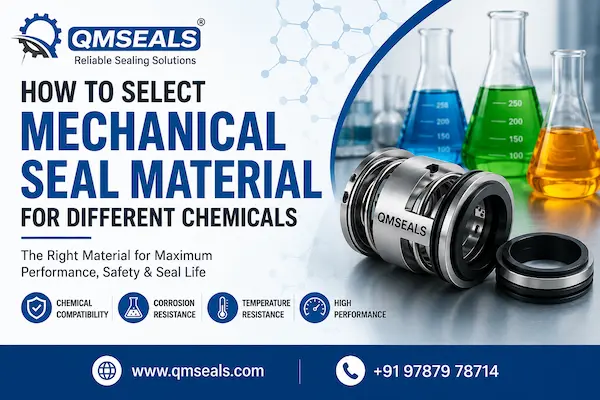
How to Select Mechanical Seal Material for Different Chemicals
In industries such as chemical processing, pharmaceuticals, water treatment, oil & gas, and food manufacturing, choosing the right mechanical seal material is critical for ensuring pump reliability, safety, and long service life. Using the wrong seal material can lead to corrosion, leakage, seal failure, equipment downtime, and costly maintenance.
Different chemicals react differently with seal components. That is why understanding chemical compatibility mechanical seals is essential before selecting a sealing solution for your pumps and rotating equipment.
At QMSeals, we help industries choose high-performance sealing solutions designed for aggressive chemicals, high temperatures, and demanding operating conditions.
Why Mechanical Seal Material Selection Matters
A mechanical seal operates under pressure, temperature, and chemical exposure. The seal face materials, elastomers, and metal components must all withstand the fluid being pumped.
Incorrect material selection can cause:
- Chemical corrosion
- Seal face cracking
- Swelling of elastomers
- Dry running damage
- Reduced seal life
- Frequent pump breakdowns
Choosing compatible seal face materials improves:
- Pump efficiency
- Leak prevention
- Equipment reliability
- Maintenance intervals
- Operational safety
Main Components of a Mechanical Seal
Before selecting materials, it is important to understand the major parts of a mechanical seal.
1. Seal Faces
These are the primary sealing surfaces that rotate against each other.
Common seal face materials include:
- Carbon Graphite
- Silicon Carbide
- Tungsten Carbide
- Ceramic
2. Elastomers
These rubber components provide secondary sealing.
Common elastomers:
- Viton (FKM)
- EPDM
- Nitrile (NBR)
- PTFE
- Kalrez
3. Metal Parts
Metal components hold the seal assembly together.
Common metals:
- Stainless Steel 304
- Stainless Steel 316
- Hastelloy
- Titanium
Factors to Consider When Selecting Mechanical Seal Material
Chemical Compatibility
The first step in selecting a mechanical seal is checking the chemical compatibility between the process fluid and seal materials.
Aggressive chemicals like acids, alkalis, solvents, and hydrocarbons require specialized materials resistant to corrosion and chemical attack.
For example:
- Sulfuric acid requires corrosion-resistant materials
- Caustic soda may damage certain elastomers
- Solvents can cause swelling in rubber components
This is why industries rely on chemical compatibility mechanical seals for safe operation.
Best Seal Face Materials for Different Chemicals
Carbon vs Silicon Carbide
Carbon is widely used because of its self-lubricating properties, but it may not withstand highly abrasive or aggressive chemicals.
Silicon carbide provides:
- Excellent corrosion resistance
- High hardness
- Superior thermal conductivity
- Better wear resistance
It is commonly used in chemical processing pumps.
Tungsten Carbide
Tungsten carbide is ideal for abrasive applications and slurry handling because of its toughness and durability.
Ceramic Seal Faces
Ceramic seal faces are economical and suitable for water-based applications, but they are less resistant to thermal shock compared to silicon carbide.
Elastomer Selection for Chemical Applications
Choosing the right elastomer is equally important.
| Elastomer | Best For | Limitations |
|---|---|---|
| Viton (FKM) | Oils, fuels, chemicals | Poor with strong alkalis |
| EPDM | Water, steam, acids | Not suitable for oils |
| Nitrile (NBR) | Petroleum fluids | Limited chemical resistance |
| PTFE | Aggressive chemicals | Less flexible |
| Kalrez | Extreme chemical environments | Higher cost |
Proper elastomer selection improves chemical compatibility mechanical seals performance and reduces leakage risks.
Mechanical Seal Material Recommendations by Chemical Type
Acids
For strong acids:
- Seal faces: Silicon Carbide
- Elastomer: PTFE or Kalrez
- Metal parts: Hastelloy
Caustic Chemicals
For alkali solutions:
- Seal faces: Tungsten Carbide
- Elastomer: EPDM
- Metal parts: Stainless Steel 316
Hydrocarbons & Oils
Recommended materials:
- Seal faces: Carbon vs Silicon Carbide combinations
- Elastomer: Viton
- Metal parts: SS316
Abrasive Slurries
Best choices:
- Tungsten Carbide seal faces
- Heavy-duty mechanical seals
- Abrasion-resistant materials
Temperature and Pressure Considerations
Chemical compatibility alone is not enough. Operating temperature and pressure also affect seal performance.
High-temperature applications may require:
- Metal bellows seals
- Advanced elastomers
- Silicon carbide seal faces
High-pressure pumps often need:
- Double mechanical seals
- Balanced seal designs
- Premium seal face materials
Common Mistakes in Mechanical Seal Material Selection
Ignoring Chemical Concentration
Some materials can handle diluted chemicals but fail under concentrated exposure.
Choosing Low-Cost Materials
Cheap materials may reduce initial cost but increase maintenance and downtime.
Overlooking Temperature Effects
High temperatures can rapidly degrade elastomers and seal faces.
Incorrect Elastomer Selection
Many seal failures occur because of incompatible elastomers rather than seal faces.
You can also read our related guide on:
- Top Mechanical Seal Failure Causes
- Lantern Rings vs Mechanical Seals
- Parts of Mechanical Seal Explained
Industries That Require Chemical Resistant Mechanical Seals
Many industries depend on properly selected mechanical seal materials:
- Chemical processing plants
- Pharmaceutical industries
- Petrochemical industries
- Water treatment plants
- Food and beverage manufacturing
- Pulp and paper industries
Each application requires specific seal face materials and elastomer combinations.
Why Choose QMSeals for Mechanical Seal Solutions
QMSeals provides high-quality sealing solutions designed for industrial applications involving aggressive chemicals and challenging operating environments.
Our solutions offer:
- High chemical resistance
- Long service life
- Reduced leakage
- Improved pump reliability
- Custom sealing solutions
We help industries select the right mechanical seal material combinations based on operating conditions, fluid properties, and pump design.
Conclusion
Selecting the correct mechanical seal material is essential for achieving long-lasting pump performance and preventing costly failures. Understanding chemical compatibility mechanical seals, operating conditions, and appropriate seal face materials helps industries improve reliability and reduce maintenance costs.
From acids and solvents to abrasive slurries and hydrocarbons, every chemical application requires careful material selection. Choosing the right seal components ensures safer operations, better efficiency, and longer equipment life.
If you are looking for reliable industrial sealing solutions, QMSeals offers expert support and premium-quality mechanical seals for various chemical applications.
Frequently Asked Questions
1. Why is chemical compatibility important in mechanical seals?
Chemical compatibility prevents corrosion, elastomer swelling, seal face damage, and leakage, ensuring longer seal life.
2. Which seal face material is best for aggressive chemicals?
Silicon carbide is commonly preferred for aggressive chemicals because of its excellent corrosion and wear resistance.
3. What elastomer is best for chemical applications?
PTFE and Kalrez are highly resistant to aggressive chemicals, while EPDM works well with water and acids.
4. Can the wrong mechanical seal material cause pump failure?
Yes. Incorrect material selection can lead to leakage, corrosion, overheating, and complete seal failure.
5. How do I select the right mechanical seal for my application?
Consider the chemical type, concentration, temperature, pressure, shaft speed, and operating environment before selecting materials.

