
Posted At: Jan 10, 2026 - 2,028 Views
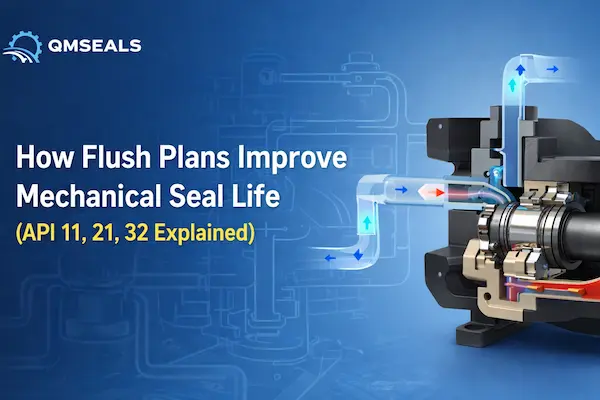
How Flush Plans Improve Mechanical Seal Life
Mechanical seal reliability plays a critical role in the overall performance and uptime of pumps used in process industries. One of the most effective yet often misunderstood aspects of seal reliability is the mechanical seal flush plan. Properly designed flush plans help control temperature, pressure, lubrication, and contamination around the seal faces—directly extending seal life and preventing premature failures.
In this blog, we will explain how flush plans improve mechanical seal life, explore commonly used API flush plans, and help you understand when and why each plan is required.
What Is a Mechanical Seal Flush Plan?
A mechanical seal flush plan refers to an engineered method of introducing, circulating, or removing fluid around the mechanical seal to create a stable sealing environment. The flush fluid may be the pumped product itself or an external fluid, depending on the application.
Flush plans are designed to:
- Remove heat generated at seal faces
- Prevent dry running
- Flush away solids or contaminants
- Maintain proper lubrication
- Control pressure around the seal chamber
Without an effective flush plan, even the highest-quality mechanical seal can fail prematurely.
Why Flush Plans Are Critical for Mechanical Seal Life
Mechanical seals operate under extreme conditions—high temperature, pressure, speed, and chemical exposure. Flush plans improve seal life by addressing these challenges systematically.
1. Temperature Control
Seal faces generate heat due to friction. Flush plans help dissipate this heat, preventing:
- Seal face distortion
- Elastomer hardening
- Thermal cracking
2. Improved Lubrication
A clean and consistent fluid film between seal faces reduces friction and wear. Proper flushing ensures continuous lubrication, even during start-up and shutdown.
3. Contamination Removal
In applications involving slurry, chemicals, or dirty fluids, flush plans remove solids that could scratch or damage seal faces.
4. Pressure Stabilization
Flush systems help maintain stable pressure at the seal chamber, reducing flashing and vaporization.
5. Extended Seal & Equipment Life
By maintaining ideal operating conditions, flush plans reduce unplanned downtime, maintenance costs, and seal replacement frequency.
Common API Mechanical Seal Flush Plans Explained
The American Petroleum Institute (API) has standardized several flush plans widely used in industrial pumping systems. Below are the most commonly used ones.
API Plan 11 – Internal Recirculation
API Plan 11 is one of the most widely used mechanical seal flush plans.
How It Works:
Fluid is taken from the pump discharge
Routed through an orifice
Directed into the seal chamber
Key Benefits:
Simple and cost-effective
Uses process fluid (no external supply)
Provides cooling and lubrication
Limitations:
Not suitable for dirty or abrasive fluids
Heat removal capability is limited
Typical Applications:
Clean liquids
General-purpose centrifugal pumps
API Plan 21 – Cooled Recirculation
API Plan 21 is similar to Plan 11 but includes a cooler.
How It Works:
Discharge fluid passes through a cooler
Cooled fluid enters the seal chamber
Key Benefits:
Better temperature control than Plan 11
Reduces thermal stress on seal faces
Limitations:
Requires additional piping and cooler
Still unsuitable for dirty fluids
Typical Applications:
Hot hydrocarbons
High-temperature oil pumps
API Plan 32 – External Flush
API Plan 32 uses an external clean fluid to flush the seal.
How It Works:
Clean external fluid is injected into the seal chamber
Flush pressure is maintained higher than seal chamber pressure
Key Benefits:
- Prevents contamination
- Excellent for corrosive, slurry, or dirty fluids
- Provides superior lubrication
Limitations:
- Requires external fluid source
- Higher operating cost
Typical Applications:
- Chemical pumps
- Slurry pumps
- Abrasive or corrosive services
How to Select the Right Flush Plan for Your Mechanical Seal
Selecting the correct flush plan depends on several operating factors:
1. Pumped Fluid Characteristics
- Clean or dirty
- Abrasive or corrosive
- Viscosity and volatility
2. Operating Temperature & Pressure
High-temperature or high-pressure applications typically require cooled or external flush plans.
3. Seal Arrangement
Single mechanical seals often use Plans 11 or 21
Double mechanical seals commonly use Plan 32 or barrier fluid systems
4. Industry & Application
Chemical and pharma industries favor external flush plans
Oil & gas applications often use API-compliant flush systems
Common Problems Caused by Improper Flush Plans
An incorrect or poorly maintained flush plan can lead to:
- Excessive seal leakage
- Seal face wear and scoring
- Heat buildup and thermal cracking
- Reduced MTBF (Mean Time Between Failures)
Proper flush plan design and maintenance are just as important as selecting the right mechanical seal.
Best Practices to Maximize Mechanical Seal Life Using Flush Plans
- Ensure correct flush pressure and flow rate
- Use clean and compatible flush fluids
- Regularly inspect orifices, coolers, and piping
- Match flush plan to seal design and process conditions
- Work with experienced mechanical seal manufacturers
Conclusion
Mechanical seal flush plans play a vital role in controlling heat, contamination, and lubrication at the seal interface. By selecting and maintaining the correct flush plan—such as API Plans 11, 21, or 32—you can significantly improve mechanical seal life, reduce failures, and enhance overall pump performance.
For critical applications, investing in the right flush plan is not an option—it is a necessity.
Frequently Asked Questions:
What is the purpose of a mechanical seal flush plan?
A flush plan controls temperature, lubrication, and cleanliness around the seal faces to extend seal life.
Which flush plan is best for dirty fluids?
API Plan 32 is ideal for dirty, abrasive, or corrosive fluids.
Can flush plans reduce seal leakage?
Yes, proper flush plans stabilize seal conditions and significantly reduce leakage.
Are flush plans mandatory for mechanical seals?
While not mandatory for all applications, flush plans are critical in high-temperature, high-pressure, or contaminated services.

