
Posted At: Nov 26, 2025 - 1,772 Views
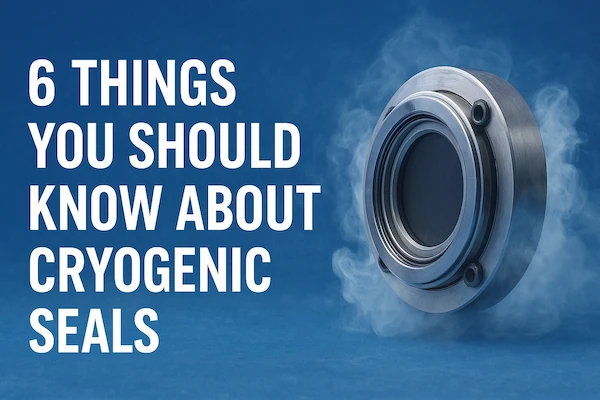
6 Things You Should Know About Cryogenic Seals
Cryogenic seals play a critical role in industries where fluids must be processed, stored, or transported at extremely low temperatures. These cryogenic seals are specially engineered to maintain tight sealing performance even in extreme cryogenic environments as low as –273°C and are essential for applications involving liquefied gases such as LNG, liquid nitrogen, helium, and hydrogen. Selecting the right cryogenic sealing solution helps prevent leakage, equipment failure, and costly downtime.
In this guide, we will explore the six most important things to know about cryogenic seals, including how they work, the materials used, and what factors influence seal performance.
1. What Are Cryogenic Seals and Why Are They Important?
Cryogenic seals are specialized sealing components designed for applications involving extremely low temperatures. Standard rubber or elastomer seals fail and lose elasticity under cryogenic conditions, which can result in leakage and safety hazards.
Cryogenic sealing systems are built using advanced materials that maintain flexibility, strength, and dimensional stability even at sub-zero temperatures, making them essential in aerospace, chemical processing, LNG plants, medical oxygen systems, and vacuum technology.
2. Materials Used in Cryogenic Seals
The performance of cryogenic seals depends heavily on the material composition. Common materials include:
PTFE (Polytetrafluoroethylene) – Ideal for extremely low temperatures, chemical resistance, and smooth sealing
PCTFE (Polychlorotrifluoroethylene) – Excellent for sealing liquid nitrogen and helium
Teflon, UHMW-PE, and PEEK – Used in high-pressure cryogenic applications
Elastomers like FFKM, NBR, EPDM – Specially formulated for low-temperature flexibility
These materials are chosen because they resist shrinkage, cracking, and brittleness caused by cryogenic temperatures.
3. How Cryogenic Seals Handle Thermal Expansion and Contraction
Mechanical components expand and contract as temperatures change, which can compromise typical sealing designs.
Cryogenic seals are engineered with precision tolerances to handle thermal cycling and sudden temperature transitions without affecting sealing performance.
This ensures stable, leak-free operation even during cooldown, warm-up, and fluctuating pressure cycles.
4. Applications of Cryogenic Seals
Cryogenic seals are widely used across industries that handle liquefied gases, high-purity chemicals, or ultra-low-temperature research. Key applications include:
LNG and LPG processing
Helium and hydrogen storage
Cryogenic pumps and compressors
Medical and laboratory equipment
Spacecraft and rocket propulsion systems
Cryogenic gas transfer valves
Reliable sealing prevents contamination, improves safety, and increases equipment lifespan.
5. Types of Cryogenic Seals
Different seal designs are used based on pressure, temperature, speed, and media compatibility:
O-Rings for Cryogenic Applications
Ideal for static sealing in storage tanks and pipelines.
Lip seals / PTFE spring-energized seals
Used in dynamic and high-pressure applications.
Cryogenic valve seals
Designed for valves controlling LNG and liquefied gases.
Gasket seals
Used where tight metal-to-metal sealing is needed.
Choosing the correct seal reduces maintenance costs and prevents unplanned shutdowns.
6. Factors to Consider When Selecting Cryogenic Seals
To ensure long-term performance, consider:
Temperature range (lowest and highest operating limits)
Pressure and media compatibility
Chemical resistance requirements
Seal type (static or dynamic)
Velocity and application environment
Certification and industry compliance standards
Working with a trusted cryogenic sealing solution supplier ensures proper material selection and design suitability.
Conclusion
Cryogenic seals are essential for safe and efficient operations in industries that handle liquefied gases and extremely low-temperature processes. Understanding material selection, pressure requirements, and sealing design helps ensure reliable performance and reduced downtime.
Choosing the right cryogenic sealing product ultimately improves operational safety, equipment life, and energy efficiency.
Frequently Asked Questions:
What are cryogenic seals used for?
Cryogenic seals are used in applications involving LNG, helium, hydrogen, chemical processing, aerospace systems, and cryogenic storage equipment.
Which materials are best for cryogenic seals?
PTFE, PCTFE, PEEK, and special elastomers like FFKM are commonly used for sealing at low cryogenic temperatures.
What is the temperature range for cryogenic seals?
Cryogenic seals can operate from –250°C to room temperature depending on material and system configuration.

